


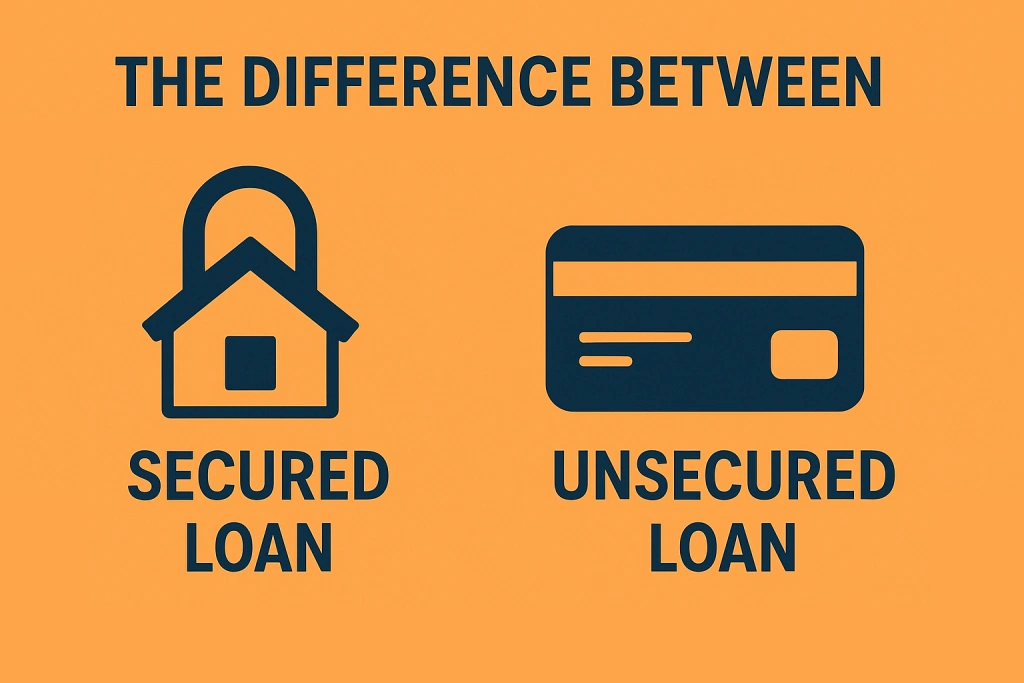
Borrowing money is a part of modern life, whether it’s for buying a home, managing a business, or covering personal expenses. With so many products available, one of the most common questions people ask is about the difference between secured and unsecured loans. Understanding how these two types of borrowing work is essential before making any financial decision.
This guide explains the difference between secured loan and unsecured loan products, outlines their main features, and explores the pros and cons of each. By the end, you will have a clear picture of the difference in secured and unsecured loans and how they may affect your financial planning.
What is a secured loan?
A secured loan is borrowing that requires property as collateral. Secured loans often offer larger borrowing limits, longer repayment terms, and lower interest rates compared to other options, due to the lender’s reduced risk.
The lender takes a legal charge over the property, which means they have the right to claim it if the borrower does not repay the loan.
Common examples include:
- Mortgages
- Second charge loans
- Secured homeowner loans
- Some business loans where property is pledged
Secured loans are often chosen when people want to borrow significant amounts, consolidate debts over a long period, or fund large expenses such as home improvements.
What is a personal loan?
When applying for a personal loan it is unsecured, meaning you don’t put anything at risk, like your home. If the borrower defaults, the lender must go to court to recover the debt.
Because the lender carries more risk, unsecured loans usually come with smaller borrowing limits, shorter repayment terms and higher interest rates compared with secured products. Examples include:
- Store card
- Credit cards
- Overdrafts
- Some forms of short-term business finance
These products are often chosen when people need to borrow a smaller sum quickly or want to avoid putting property assets at risk.
The difference between secured and unsecured loans
The main difference between unsecured and secured loan products is whether you need to provide security. With a secured loan, a property is pledged as security to reduce the lender’s risk. At Envelop we only lend on land and property registered with the land registry. With an unsecured loan, no security is required, but the lender charges more to cover the increased risk.
This difference between unsecured and secured loans shapes how each product is used. Secured loans are designed for larger, long-term borrowing and may offer lower monthly payments due to extended repayment periods in some cases interest only options.
Personal loans are usually shorter-term solutions and can be faster to arrange, but with higher interest rates.
Understanding the difference between secured and unsecured personal loan options is crucial before applying. Choosing the wrong product may leave you with unsuitable repayments or unnecessary risks.
Pros and cons of secured loans
Advantages:
- Larger borrowing limits are available
- Longer repayment terms can reduce monthly costs
- Lower interest rates compared with most unsecured loans
- Flexible use, from home improvements to debt consolidation
Disadvantages:
- Risk of losing your property if repayments are not maintained
- Application process may involve valuations and legal checks
- Not ideal for small, short-term borrowing needs
- Some lenders impose arrangement or early repayment fees
Secured loans are well suited to people who are comfortable using property as a security, and who want to spread costs over many years.
Pros and cons of personal loans
Advantages:
- No property security required
- Applications are usually quicker and less complex
- Suitable for smaller sums and short-term borrowing
- Widely available through banks, building societies and finance companies
Disadvantages:
- Higher interest rates compared with secured loans
- Lower borrowing limits may not meet large funding needs
- Shorter repayment periods can mean higher monthly instalments
- Capital repayment only
Personal loans are often the first choice for individuals looking to borrow modest amounts without putting their property at risk.
When to use a secured loan
- Borrowing large sums for home improvements or property investment
- Consolidating multiple debts into a single loan over a long term
- Financing a business expansion when property is available to be used as security
- Seeking lower interest rates on substantial borrowing
When to use an unsecured loan
- Covering unexpected personal expenses such as car repairs
- Funding smaller home projects or holidays
- Consolidating modest debts into one manageable payment
- Accessing quick finance without security being held
Detailed comparison: secured vs unsecured
- Security: Secured loans require property assets; unsecured loans do not
- Borrowing limits: Secured loans allow higher sums; unsecured loans are limited
- Repayment terms: Secured loans can run for decades; unsecured loans are usually short to medium term
- Interest rates: Secured loans often have lower rates; unsecured loans are higher to offset risk
- Speed: Unsecured loans are quicker to arrange; secured loans take longer due to checks and legal steps
- Risk: Secured loans risk the property; unsecured loans risk higher costs and potential legal action if not repaid
This difference in secured and unsecured loans underlines why careful planning is essential before applying.
FAQs about secured and unsecured personal loans
What is the main difference between secured and unsecured personal loans?
The main difference is whether security is needed. Secured loans require property as security, while unsecured loans do not.
Which has the cheaper interest rate: secured or unsecured?
Secured loans usually offer lower interest rates, but they carry the risk of losing your property if you default. Unsecured loans are pricier but avoid that risk.
Can I get a secured loan without owning property?
Secured loans with Envelop Property finance require you to own a property.
Are unsecured loans easier to get?
Unsecured loans can be quicker to arrange, but approval wholly depend on income, affordability and financial history.
Final thoughts
The difference between secured and unsecured loans matters because it affects how much you can borrow, the cost of repayments and the level of risk you take. Secured loans provide access to larger sums at lower rates but require security being held. Unsecured loans are faster and simpler but are usually smaller and pricier. By weighing up the difference between secured and unsecured loans carefully, you can choose the option that fits your needs. Envelop Finance can provide guidance, helping you understand the difference between secured loan and unsecured loan products and find the right solution for your situation.