


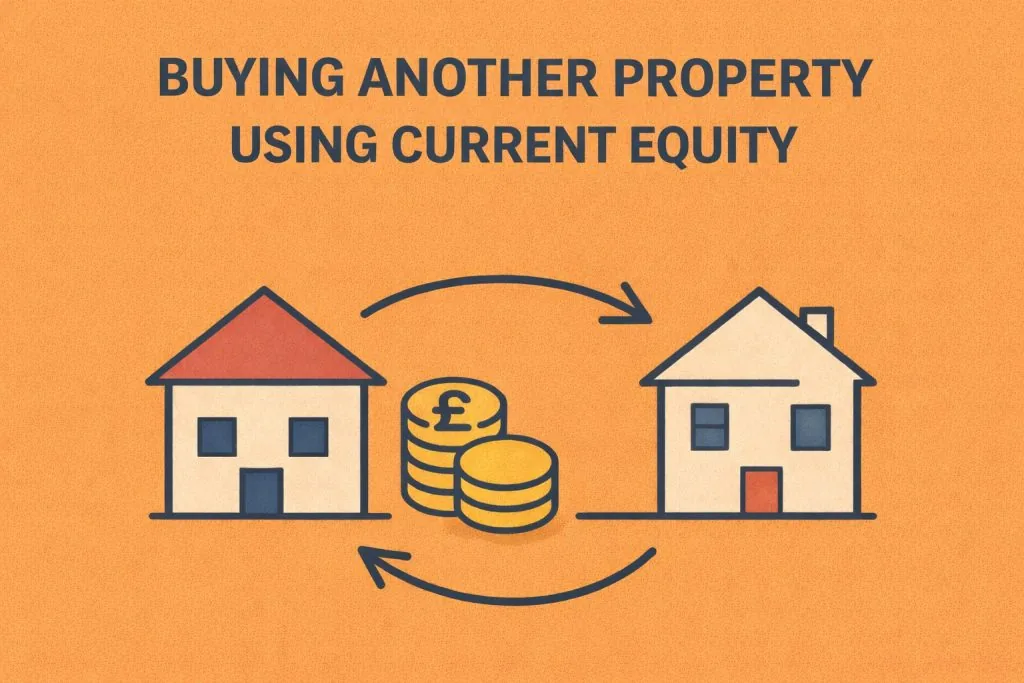
As property prices rise, many homeowners find themselves asset-rich but cash-poor. This often leads to a common question: can you release equity from your home to buy another property? The idea is appealing. Rather than saving for years, you use the value already tied up in your home to fund the next purchase.
While such an arrangement is possible in many cases, it is not as simple as unlocking cash and buying again. Before proceeding, it is crucial to clearly understand the new borrowing, risks, and long-term commitments that come with releasing equity.
This guide explains how equity release for property purchases works in practice, when it makes sense, and where people often underestimate the consequences.
What releasing equity actually involves
Releasing equity means increasing the borrowing secured against your existing home. This is usually done by remortgaging, taking a further advance, or using a secured loan. The funds released can then be used as a deposit or, in some cases, to purchase another property outright.
A key misunderstanding is that equity is “free money”. It is not. Any equity released becomes debt, with interest and repayment obligations attached. The affordability of that new borrowing must still be assessed, even if the intention is to buy an investment property.
It is also important to distinguish this from lifetime equity release products, which are typically aimed at older homeowners and operate under different rules.
Common reasons people release equity to buy property
People release equity for different strategic reasons, and lenders assess these differently.
- Some buyers use equity to fund a deposit for a buy-to-let property while keeping their main residence unchanged.
- Others release equity to purchase a second home, such as a holiday property or future downsizing option.
- Some homeowners use equity to buy property through a limited company, particularly where tax or investment planning is involved.
The purpose of the purchase matters, as it affects affordability checks, lender appetite, and product availability.
When releasing equity makes sense
Using equity to buy another property can be sensible when the numbers work without relying on optimistic assumptions.
It often makes sense if:
- You have significant equity and stable income
- The new property generates rental income that supports its own costs
- You can comfortably afford repayments even if rental income is interrupted
- You plan to hold both properties for the long term
In these cases, equity release can accelerate property investment without destabilising personal finances.
When it usually does not make sense
Equity release becomes risky when it stretches affordability or relies on best-case scenarios.
It is often unsuitable if:
- Your income is already tightly balanced
- You are relying on future rental income to cover existing mortgage costs
- Interest rate increases would cause financial strain
- You plan to sell either property in the short term
In these situations, equity release can amplify risk rather than spread it.

How lenders assess equity release for property purchases
Lenders look at more than just property value when equity is released to buy another property.
- Affordability is assessed on your total borrowing, not just the original mortgage. This includes stress testing against higher interest rates.
- Loan-to-value limits apply to the existing property. Releasing too much equity can restrict future options.
- Purpose of funds may be reviewed. Buying an investment property is assessed differently from personal use.
- Rental income from the new property may or may not be fully included in affordability calculations, depending on lender policy.
- Credit profile remains relevant, even with significant equity.
Costs and risks people often overlook
One overlooked risk is concentration. You are increasing exposure to the property market by tying multiple properties to the same borrowing profile.
There are also costs beyond interest:
- Valuation and legal fees
- Potential early repayment charges
- Higher overall debt exposure
Another risk is liquidity. Property is not a liquid asset. If circumstances change, selling may take time or force compromises.
Example scenarios in practice
- A homeowner with substantial equity may release funds to purchase a buy-to-let property that comfortably covers its own mortgage, creating a diversified income stream.
- A couple releasing equity late in their working life may observe that extended borrowing affects retirement planning more than expected.
- A homeowner relying on optimistic rental projections may struggle if void periods or rate rises occur.
Alternatives to releasing equity
- Releasing equity is not the only route to buying another property.
- Some buyers choose to save separately for a deposit, even if it takes longer.
- Others consider joint ventures or partnerships to reduce personal exposure.
- Selling and upsizing or downsizing can sometimes be a cleaner way to restructure property ownership.
- Each alternative sacrifices speed in exchange for reduced risk.
How Envelop Finance can help
Releasing equity to buy another property requires careful modelling of affordability, risk, and long-term impacts. A broker can help assess whether equity release supports your strategy or introduces unnecessary pressure. This includes stress testing repayments and comparing alternative funding routes before committing.
Frequently asked questions
Can I release equity if my income has not increased?
Possibly, but affordability checks still apply and may limit options.
Does rental income always count towards affordability?
Not always. Lender treatment of rental income varies.
Can equity be released for a limited company purchase?
Yes, in some cases, though structure and guarantees matter.
Is releasing equity the same as remortgaging?
Remortgaging is one common method, but not the only option.
Conclusion
Yes, you can release equity from your home to buy another property, but doing so increases leverage and long-term exposure. When managed carefully, it can accelerate property ownership and investment. When done without proper affordability planning, it can magnify risk. The decision should be driven by realistic income assumptions, interest rate resilience, and long-term goals rather than the availability of equity alone.