


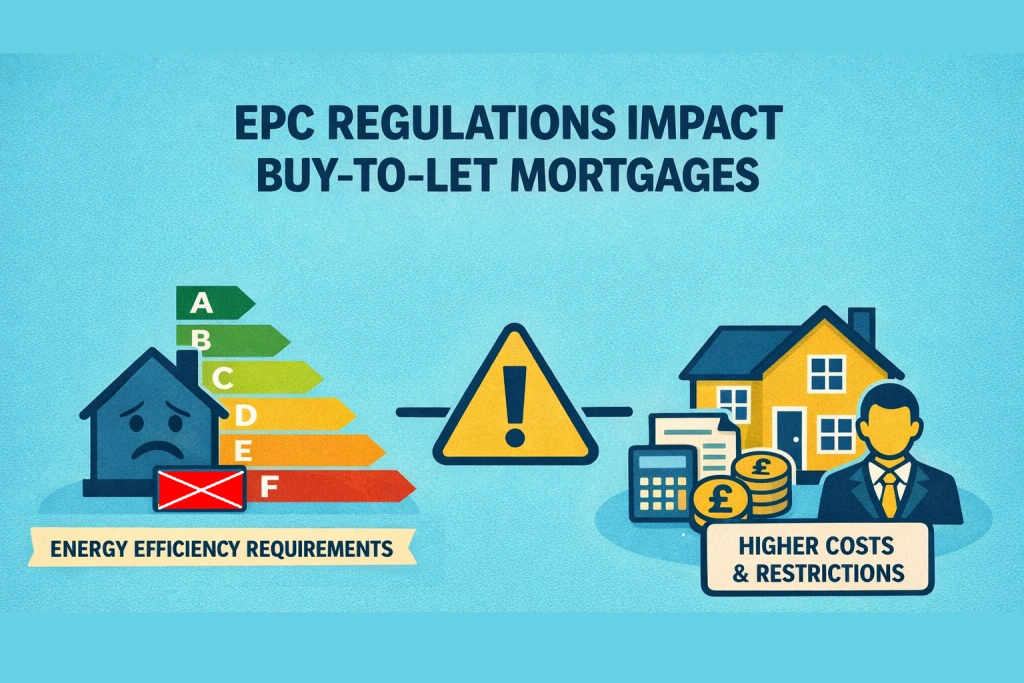
Energy performance certificates have moved from a compliance formality to a funding consideration.
For landlords, EPC ratings increasingly influence whether a property can be legally let, how easily it can be refinanced; and, in some cases, how lenders assess long-term risk. The regulatory direction toward travel has created additional scrutiny around lower-rated properties, particularly those graded E, F, or G.
Understanding how EPC requirements intersect with buy-to-let lending allows investors to plan upgrades, refinancing and acquisitions more strategically.
The current minimum standard
Under existing regulations in England and Wales, most privately rented residential properties must meet a minimum EPC rating of E to be legally let, unless a valid exemption applies.
Properties rated F or G cannot normally be let without improvement works or formal exemption registration. This minimum standard already affects mortgageability, because lenders expect properties secured with buy-to-let loans to be legally lettable.
Where a property falls below the minimum rating and no exemption is in place, lenders may refuse to lend until compliance is demonstrated.
This is not primarily about environmental positioning. It is about enforceability and risk.
Proposed tightening and regulatory uncertainty
There have been policy discussions around increasing the minimum EPC requirement for rented properties to a higher band in the future. Consultation and adjustment have shaped timelines and final thresholds, but the overall direction has been toward improved energy efficiency standards.
For lenders, regulatory uncertainty introduces future compliance risk. A currently compliant property may require investment to remain compliant if standards rise.
Credit teams therefore assess not only whether a property meets today’s requirement, but whether it is at risk of becoming non-compliant during the loan term.
A long-term mortgage secured against a low-rated property carries regulatory exposure.
How lenders view EPC ratings in practice
EPC ratings are rarely the sole determinant of a lending decision. However, they influence:
- Marketability
- Tenant demand
- Future saleability
- Compliance risk
- Upgrade cost exposure
A property with a strong rating presents fewer regulatory concerns and may appeal to a broader tenant base. Conversely, properties at the lower end of compliance bands may attract closer scrutiny.
Where a property is rated E, lenders may consider whether modest works could improve it to D or above, strengthening its resilience.
Where a property is rated F or G, lending is typically conditional upon upgrade works being completed.
Mortgage underwriting and EPC sensitivity
Buy-to-let mortgages are assessed primarily on rental income and stress testing. However, valuation and compliance form part of underwriting.
If a valuer identifies that a property requires energy efficiency improvements to remain legally lettable, such improvements may:
- Affect valuation
- Trigger retention conditions
- Require works before completion
- Influence loan-to-value
In some cases, lenders may impose conditions requiring confirmation of compliance prior to drawdown.
EPC ratings can therefore indirectly influence leverage and processing timelines.
Valuation impact and market perception
Energy efficiency increasingly affects buyer and tenant behaviour.
Properties with higher EPC ratings may benefit from:
- Lower energy bills for tenants
- Wider marketing appeal
- Reduced void risk
Lower-rated properties may face:
- Reduced tenant demand
- Negotiation pressure on rent
- Additional upgrade requirements
Valuers consider market perception when assessing value. If energy performance becomes a stronger driver of tenant choice, properties at the lower end of the rating scale may see softer valuations relative to comparable higher-rated assets.
For leveraged landlords, valuation sensitivity affects refinancing capacity.
The cost of upgrading low-rated properties
Improving EPC ratings may involve:
- Insulation upgrades
- Replacement boilers
- Window improvements
- Heating system changes
The cost varies significantly depending on property type and starting condition.
Where improvement works are required to maintain compliance, landlords must factor this capital expenditure into yield calculations.
The net return profile shifts if upgrade costs are high in comparison to rental income.
Some lenders may consider light refurbishment or improvement works within a bridging or short-term facility, particularly where the exit involves refinancing onto a standard buy-to-let product once compliance is achieved.
Portfolio landlords and cumulative exposure
For landlords holding multiple properties, EPC exposure is cumulative.
If several assets sit at the lower end of compliance bands, the future tightening of regulations could require coordinated upgrade programs.
Lenders reviewing portfolio applications may consider:
- Distribution of EPC ratings across assets
- Capital reserves available for improvements
- Exposure to regulatory shifts
Lenders may view a diversified portfolio with stronger average ratings as more resilient.
Where exposure is concentrated in older housing stock with weaker ratings, lenders may adopt more conservative stress assumptions.
Refinance timing and regulatory planning
EPC considerations are particularly relevant when refinancing.
If a property’s rating is borderline or likely to fall below future minimums, lenders may question long-term viability during underwriting.
Landlords planning to refinance within the next 12 to 24 months should review EPC certificates proactively rather than reactively.
Undertaking improvement works before refinancing can strengthen valuation and reduce compliance queries during underwriting.
Waiting until the application stage can cause delays.
Strategic acquisition considerations
For investors acquiring new buy-to-let properties, EPC rating should form part of due diligence.
Properties already rated D or above may offer greater regulatory headroom. Lower-rated assets may still be attractive if upgrade costs are modest and the uplift in value or rent justifies the expenditure.
However, purchasing property at the minimum legal threshold without capacity for improvement introduces risk.
Acquisition pricing should reflect upgrade cost exposure.
Exemptions and limitations
Certain properties may qualify for exemptions where improvement is not technically feasible or where costs exceed prescribed limits.
However, exemptions are not permanent solutions. They must be registered and are subject to review.
Lenders generally prefer assets that comply without reliance on exemption status.
Reliance on exemptions can complicate underwriting and future resale.
A forward-looking approach
EPC regulations are part of a broader shift toward energy efficiency in housing policy.
Although the exact timelines for stricter standards may change, the overall trend has remained consistent.
Landlords who consistently monitor energy performance across their portfolios and gradually plan improvements are in a better position than those who only respond during refinancing or re-letting.
Compliance, tenant demand, and mortgageability increasingly link energy performance.
If you are reviewing your buy-to-let portfolio and want to understand how EPC ratings may affect future borrowing, refinancing or acquisition decisions, Envelop Finance can assess lender appetites and funding options in light of current and evolving standards.