


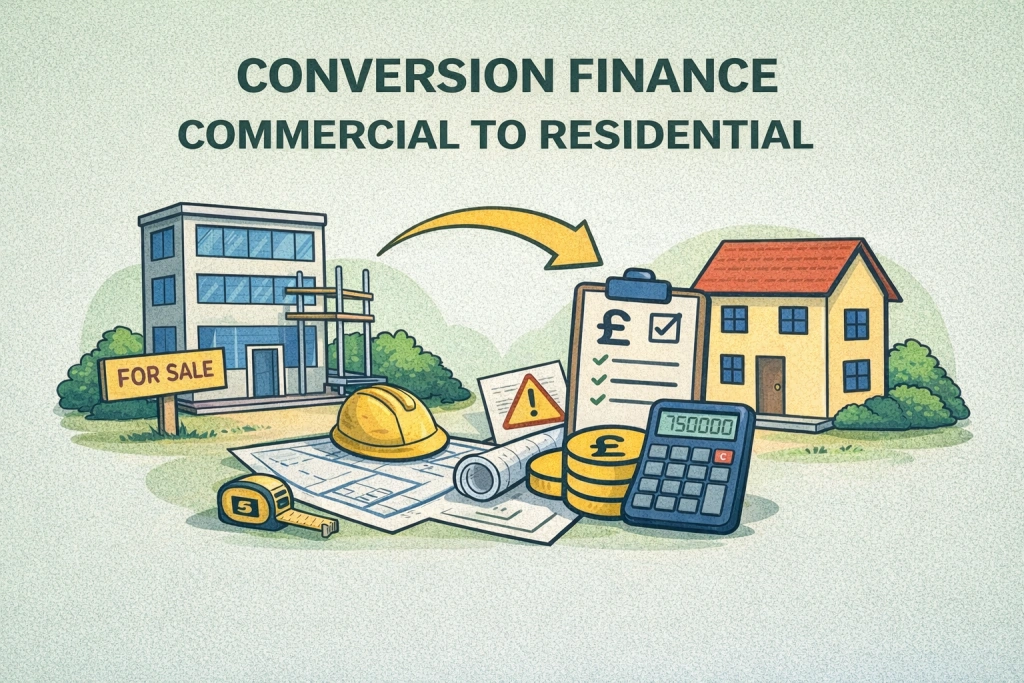
Commercial-to-residential conversions can unlock significant value — but they come with unique risks.
Understanding how development finance for commercial-to-residential conversions in the UK works is essential before starting a project.
Lenders assess these schemes differently from ground-up developments, focusing heavily on:
• Planning status
• Structural complexity
• Exit strategy
What Is Commercial to Residential Conversion Finance?
This type of finance is used to:
• Convert offices, retail, or other commercial buildings into residential units
• Fund refurbishment and structural changes
• Bridge the project until sale or refinance
Can You Get Finance for Conversions in the UK?
Yes — but approval depends on:
• Planning permission or permitted development rights
• Structural feasibility
• Experience of the developer
• A clear exit strategy
Why Planning Permission Matters
Planning status is the first major factor lenders assess.
Strong scenarios:
• Full planning permission granted
• Conditions discharged
Higher-risk scenarios:
• Permitted development (with compliance risk)
• Article 4 areas
• Planning not yet secured
Structural and Compliance Risks
Conversions often involve hidden challenges:
• Load-bearing wall constraints
• Fire safety upgrades
• Ceiling height limitations
• Utility reconfiguration
• Listed building restrictions
How Lenders Assess Conversion Projects
Lenders focus on:
• Build costs and contingency
• End value (GDV)
• Market demand
• Exit strategy
• Professional team experience
How Much Can You Borrow?
Typical terms include:
• Loan-to-cost: around 60–70%
• Term: 12–24 months
• Interest: often rolled up
Exit Strategies for Conversion Projects
Exit is critical to approval.
Common options:
• Sell units after completion
• Refinance onto buy-to-let
• Hybrid strategy (sell + refinance)
Risks of Commercial to Residential Conversions
Key risks include:
• Hidden structural costs
• Planning or compliance delays
• Lower-than-expected valuation
• Weak buyer or rental demand
Example: Conversion Project
• Purchase: £800,000
• Build cost: £400,000
• Fees: £80,000
• Total: £1.28m
• GDV: £1.75m
How to Improve Your Chances of Approval
• Conduct structural surveys early
• Use experienced contractors
• Build realistic timelines
• Include strong contingency
• Provide clear exit strategy

FAQs
Can I finance a commercial to residential conversion?
Yes — through development finance, subject to planning and feasibility.
Do I need planning permission?
Usually yes, unless permitted development applies.
Is conversion finance more expensive?
Often slightly, due to higher risk.
What is the biggest risk?
Hidden structural costs and valuation shortfalls.
Final Thoughts
Commercial-to-residential conversion finance in the UK can unlock strong returns — but only when projects are structured carefully.
Successful developers:
• Plan early
• Understand risk
• Stress-test assumptions
• Align finance with strategy