


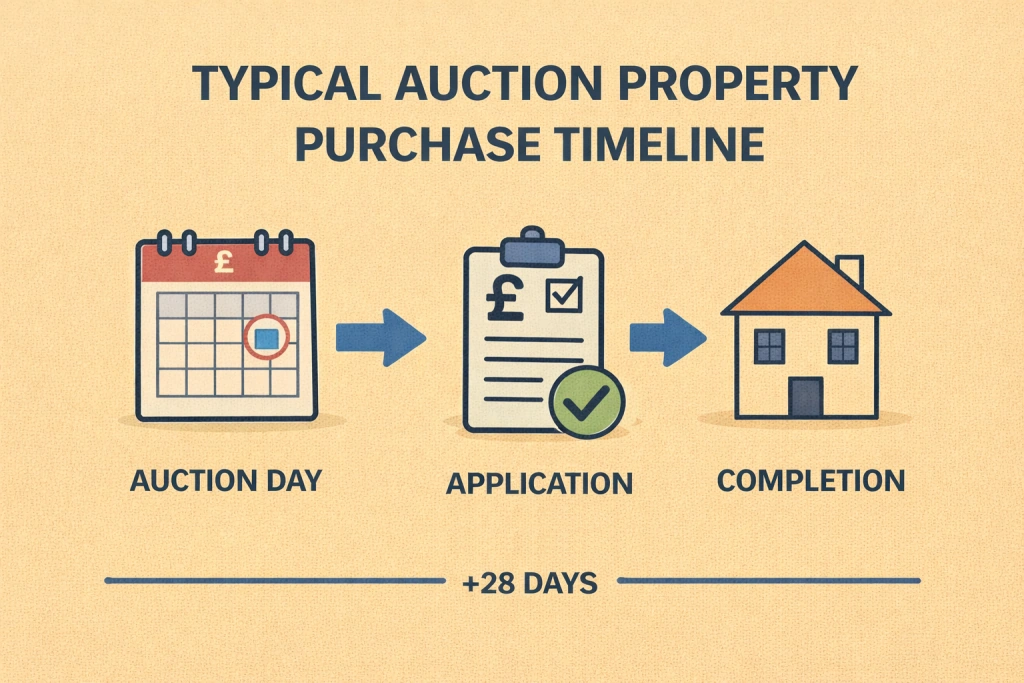
Buying at auction compresses what is usually a multi-month property transaction into a fixed completion window. Typically, the buyer has 28 days from the start of the auction to complete the transaction.
That timeline does not adjust for delays in valuations, underwriting, or legal reviews. The obligation is contractual. If funds are not ready in time, the deposit is at risk.
Bridging finance is often used in this context because it is structured around speed. Understanding how the process unfolds, week by week, reduces execution risk and prevents avoidable delays.
Before the auction: Preparation phase
The work begins before bidding.
Serious buyers should secure:
- Proof of funds for the deposit
- An agreement in principle from a bridging lender
- A solicitor experienced in short-term finance
- A clear exit strategy
- Early review of the legal pack
Auction purchases move quickly because due diligence is front-loaded. Legal packs are available in advance and should be reviewed before the auction date.
Key documents include:
- Title information
- Special conditions of sale
- Lease details where applicable
- Searches or confirmation of search insurance
- Any planning or building regulation history
Special conditions often contain additional fees, strict timelines or vendor-imposed penalties. Overlooking these can materially affect funding requirements.
At this stage, lenders will also want clarity on:
- Intended use of the property
- Refurbishment scope
- Whether the property is currently habitable
- Anticipated exit route
Preparation determines whether a 28-day completion is realistic.
Understanding loan structure before bidding
Auction buyers must also understand how bridging finance is structured.
Most lenders will advance a percentage of the lower of purchase price or valuation. Typical loan-to-value ratios range between 65 and 75 percent for standard residential investment property, though this depends on condition and exit strength.
For example:
If a property is purchased for £200,000 and valued at £190,000, the lender may base the advance on £190,000 rather than the purchase price. The buyer’s own capital may need to cover the funding shortfall resulting from this.
Interest is often retained for the agreed term. This means the lender deducts the interest cost from the gross advance at completion, reducing the net funds received. Buyers must account for this when calculating the required deposit and fees.
Clarity on these mechanics before bidding prevents unexpected capital gaps.

Day of auction: Contract becomes binding
When the hammer falls:
- A deposit is paid, typically 10 percent
- A binding contract is formed
- The completion clock starts
There is no cooling-off period. Finance must now move from indicative to committed.
Once the lender has pre-discussed bridging, they can immediately instruct valuation and initiate formal underwriting.
Buyers who approach lenders only after a successful bid often lose valuable time in the first few days, compressing underwriting unnecessarily.
Week 1: Valuation and underwriting submission
During the first week after auction:
- Valuation is instructed
- Full application is submitted
- Solicitors are formally engaged
- Legal pack is reviewed in depth
The valuation confirms:
- Market value
- Saleability
- Structural condition
- Any material legal risks
- Suitability for the proposed exit
Auction properties are sometimes unmortgageable in their current state due to condition, short leases or title complications. If the exit strategy relies on refinancing, this must be assessed early.
Underwriting will assess:
- Loan-to-value
- Borrower background
- Asset liquidity
- Strength of exit evidence
Missing documentation at this stage is one of the most common causes of delay.
Week 2: legal review and offer stage
By week two:
- Valuation report should be returned
- Formal offer can be issued
- Solicitors review title in detail
Lender solicitors will check:
- Title defects
- Restrictions
- Lease length and covenants
- Compliance with lender requirements
If valuation comes back below purchase price, additional capital may be required. Auction contracts rarely allow renegotiation of price, so liquidity planning is essential.
Insurance must also be arranged via exchange, not completion. Lenders require confirmation before drawdown.
Week 3: Satisfying conditions
Once the offer is issued, remaining conditions must be met.
These may include:
- Updated financial documents
- Evidence of deposit source
- Confirmation of refurbishment budget
- Planning clarification if structural works are proposed
For tenanted auction properties, lenders will also review:
- Tenancy agreements
- Rental income levels
- Arrears history
- Tenant status
Simultaneously, solicitors prepare for drawdown by:
- Finalising certificates of title
- Confirming redemption figures if applicable
- Agreeing completion statements
Delays during this stage often stem from unresolved title queries or incomplete documentation
Week 4: completion and drawdown
In the final week:
- Funds are requested from the lender
- Completion statement is finalised
- Monies are transferred
- Purchase completes
Lenders cannot release funds without valuation approval, underwriting sign-off and clean legal certification. Internal credit processes still apply even under time pressure.
If preparation has been thorough, completion within 28 days is achievable. If not, risk escalates quickly.
What happens if the deadline is missed
Auction contracts are strict.
If completion does not occur:
- The deposit may be forfeited
- Interest may accrue daily
- The seller may pursue damages
- Legal costs can increase
Short extensions can sometimes be negotiated, but they are not guaranteed and may involve additional fees.
Relying on extension as a strategy is high risk.
Exit strategy planning from day one
Bridging finance is short term. A defined exit is required before funds are released.
Common auction exits include:
- Refinance onto buy-to-let mortgage
- Sale following refurbishment
- Sale of another property
If refinancing is intended, the property must meet term lending criteria once works are complete. If a sale is planned, pricing must reflect realistic market demand.
The credibility of the exit strategy is often the deciding factor in lender approval.
A structured approach reduces execution risk
An auction purchase using bridging finance is not simply about speed. It is about sequencing:
- Preparation before bidding
- Immediate mobilisation after exchange
- Efficient underwriting coordination
- Realistic exit planning
When these elements align, a 28-day completion window is workable.
If you are considering bidding at auction and want to assess whether bridging finance can be structured within the contractual timeframe, Envelop Finance can review the property, funding structure and exit strategy before you commit.