


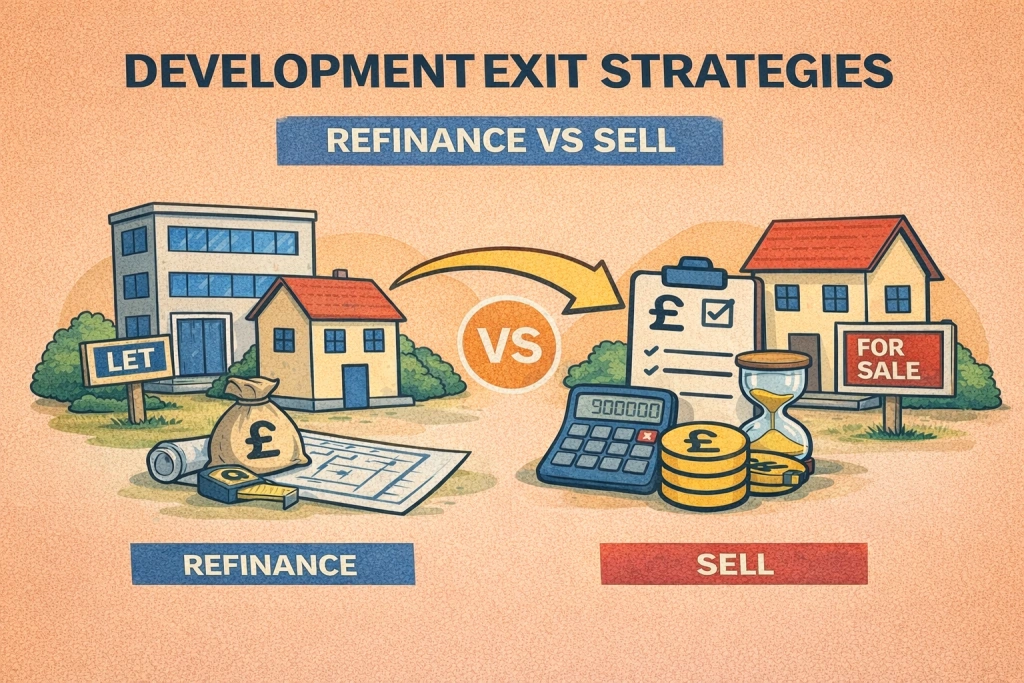
Choosing the right development exit strategy in the UK can determine whether a project succeeds or underperforms.
The key decision most developers face is: refinance or sell?
This choice should be made before development begins, not at completion.
What Is a Development Exit Strategy?
A development exit strategy is your plan to repay development finance and realise profit.
The two main options are:
• Selling the completed units
• Refinancing onto long-term debt
Refinance vs Sell: What’s the Difference?
Selling on Completion
• Units are sold after build completion
• Profit is realised immediately
• Capital is recycled quickly
Refinancing
• Development loan is replaced with long-term finance
• Property is retained
• Rental income is generated
When Selling Is the Better Exit Strategy
Selling works best when:
• Buyer demand is strong
• Market liquidity is high
• You want to release capital quickly
Advantages:
• Immediate profit
• No long-term debt exposure
• Lower interest rate risk
Risks:
• Price reductions
• Slow sales
• Extended holding costs

When Refinancing Is the Better Option
Refinancing is suitable when:
• Rental demand is strong
• You want long-term income
• Portfolio growth is the goal
Advantages:
• Recurring income
• Capital appreciation
• Portfolio expansion
Risks:
• Interest rate sensitivity
• Rental stress testing
• Lower-than-expected loan size
What Do Lenders Look For in Exit Strategies?
Lenders assess:
• Gross Development Value (GDV)
• Market demand and liquidity
• Rental income (for refinance)
• Comparable sales evidence
• Timeline realism
Market Conditions That Affect Your Exit
- Interest Rates
- Higher rates make refinancing harder.
- Buyer Demand
- Strong demand supports selling.
- Rental Market Strength
- High rental demand supports refinancing.
- Regional Performance
- Different UK regions behave differently.
Example: Refinance vs Sell Scenario
Development:
• GDV: £1.2m
• Cost: £900k
If Selling:
• 5% price drop reduces profit significantly
• Slower sales increase costs
If Refinancing:
• Rental income must meet lender stress tests
• Shortfall may require extra capital
Hybrid Exit Strategies
Experienced developers often combine both:
• Sell some units, refinance others
• Phase sales over time
• Refinance first, sell later
How to Stress-Test Your Exit Strategy
Before starting, ask:
• What if values drop 5%?
• What if refinance LTV is lower?
• What if sales are delayed?
• What if rental demand weakens?
FAQs
What is the best exit strategy for property development?
It depends on market conditions, but flexibility often performs best.
Is refinancing safer than selling?
Not always — it depends on rental income and interest rates.
Can I combine both strategies?
Yes — many developers use hybrid approaches.
When should I decide my exit strategy?
Before securing development finance.
Final Thoughts
The best development exit strategy in the UK is not fixed — it is adaptable.
• Selling offers speed and liquidity
• Refinancing offers long-term growth